

Why Returning Astronauts Often Need Reading Glasses
Space travel is the ultimate adventure, but it comes with a physical price tag that many people don't expect. While we often hear about muscle atrophy and bone density loss, there is another peculiar side effect of living in microgravity: your vision changes.
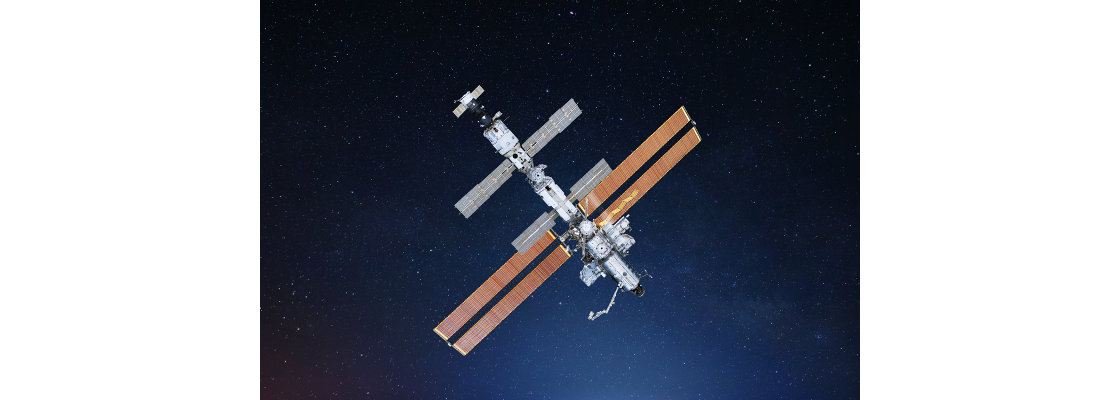
As we welcome home the latest crew from the International Space Station (ISS)—NASA astronauts Zena Cardman and Mike Fincke, JAXA astronaut Kimiya Yui, and Roscosmos cosmonaut Oleg Platonov—it is a perfect time to explore the fascinating and somewhat blurry reality of returning to Earth.
The Phenomenon: Spaceflight-Associated Neuro-Ocular Syndrome (SANS)
For years, astronauts would return from long-duration missions complaining that their vision had changed. They suddenly needed reading glasses or found that their distance vision wasn't quite as sharp as it was before launch. Scientists eventually gave this condition a name: Spaceflight-Associated Neuro-Ocular Syndrome, or SANS.
It is estimated that a significant portion of astronauts on long-duration missions experience some degree of SANS. For a crew like Cardman, Fincke, Yui, and Platonov, who have spent months aboard the orbiting laboratory, these physiological shifts are a real concern during their readjustment to gravity.
What Causes the Blurriness?
The primary culprit is fluid shift.
On Earth, gravity pulls fluids toward our feet. In the weightlessness of space, that constant downward pull disappears. Instead, fluids shift upward toward the head. This gives astronauts that classic "puffy face" look you often see in photos from the ISS.
But this fluid shift does more than just puff up faces. It increases intracranial pressure—the pressure inside the skull. This extra pressure pushes against the back of the eye, specifically the optic nerve and the eyeball itself.
Over time, this pressure can actually flatten the back of the eyeball. Since the shape of your eye determines how light focuses on your retina, changing that shape changes your vision. The result is often hyperopia, or farsightedness. An astronaut who had perfect 20/20 vision might return home needing help to read a checklist or a computer screen.
The Road to Recovery and Research
For the recently returned crew, the journey isn't over just because they have splashed down. They now face a period of intense rehabilitation. While muscles and bones can be strengthened with exercise, the eyes are more complex.
For some astronauts, the vision changes are temporary and resolve as their bodies readjust to Earth's gravity and fluids redistribute naturally. However, for others, the structural changes to the eye can be permanent, requiring them to wear corrective lenses for the rest of their lives.
NASA and other space agencies are working hard to solve this puzzle. Current research involves:
- Specialized sleeping sacks that create a vacuum effect to pull fluids back toward the feet during sleep.
- Advanced imaging scans (OCT scans) performed on the ISS to track eye health in real-time.
- Artificial gravity studies to see if short bursts of gravity can prevent the fluid shift.
As we celebrate the safe return of Zena Cardman, Mike Fincke, Kimiya Yui, and Oleg Platonov, we are reminded of the incredible sacrifices astronauts make. They don't just risk their safety during launch and reentry; they volunteer their own biology to help us understand how humans can one day live among the stars.
So, if you see a returning astronaut reaching for a pair of reading glasses, you'll know exactly why. It's just a small souvenir from their time in zero-g.
Related Products
-350x350.png "I Need You Hangover blue light blue")
I Need You Hangover blue light blue
Award Winning Hangover Blue/Blue Reading glasses.I Need You Hangover reading glasses blue with light..
£20.00 Ex Tax: £16.67
-350x350.png "I Need You Hangover Life blue reading glasses")
I Need You Hangover Life blue reading glasses
I Need You Hangover Life BlueI Need You Hangover Life blue reading glasses for men and women. P..
£20.00 Ex Tax: £16.67
-350x350.png "I Need You Hangover black award winning reading glasses")
I Need You Hangover black award winning reading glasses
Black Hangover Reading GlassesBlack Hangover reading glasses are an award winning design ..
£20.00 Ex Tax: £16.67
-350x350.png "I Need You Hangover panto havana reading glasses")
I Need You Hangover panto havana reading glasses
Hangover panto round Havana reading glasses See in the weekend with a hangover. Named hangov..
£20.00 Ex Tax: £16.67